Who We Are
100% Australian owned and operated fuel company delivering excellence nationwide.
Read More All Services
 Find a StationOur Fleet
Seeding and harvest downtime is often blamed on machinery. A surprising amount of it is an empty tank and a tanker that is already promised to three other farms. Rural fuel planning is downtime planning.
This sits next to a general farm delivery guide. Here the focus is narrower: how on-farm diesel supply stays ahead of the weather window you cannot get back.
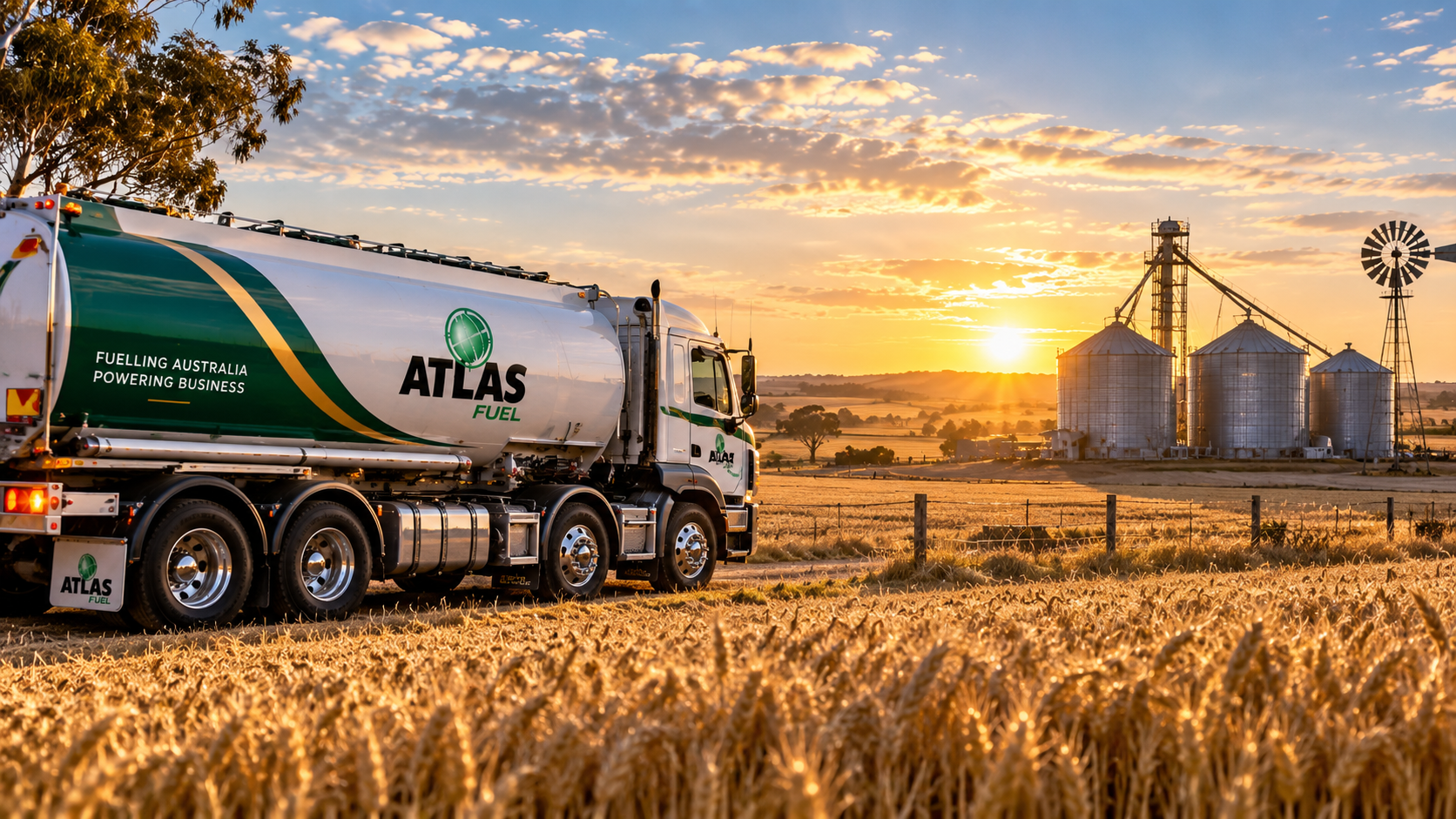
Atlas Fuel’s agriculture team plans on-farm diesel around seeding and harvest peaks so rural tanks are not empty when the weather window opens. That is the point of Atlas Fuel’s agriculture fuel delivery model for WA and Australian farms.
Atlas Fuel can help size on-farm storage and set a seasonal cadence before the district books every tanker on the same Monday. Send farm location and peak litres via contact while machines are still in the shed.
Mark the weeks you expect to seed, spray and harvest, and the litres those weeks burned last year. Note wet years, contract hectares and an extra truck if you have one. A yearly average will tell you the supply is fine in July. July is not the problem.
Send that calendar to your agriculture fuel supplier before the district orders at once. Ask what they can hold for you and what they cannot. A truthful no in autumn is more useful than a hopeful yes in the first week of harvest.
Size tanks for peak daily burn across the real lead time, then add a missed delivery. If the truck needs two days and you might lose one to weather, the tank has to say so. A reorder point painted on the gauge beats a feeling that there is still plenty.
Dip at the same time each day during the peak and write it down. Onsite diesel delivery can only respond to an order you actually place. The header operator should not be the first person to discover the problem.
A supplier who cannot reach the tank after rain is not a supplier that week. Walk the route with a truck in mind: gates, soft corners, powerlines, receival traffic. Leave a contact who will answer at 5am.
Changing supplier in the middle of seeding or harvest is how small gaps become stoppages. If you are unhappy, plan the change after the peak and keep overlap stock. Use a proper supplier comparison when you do it. Rumour is a poor tender.
Water in a farm tank shows up as filters and lost hours exactly when contractors are dearest. Drain water, keep caps on, and tell the supplier if a tank has a history of diesel bug. A clean load into a dirty tank is still your downtime.
If a load looks wrong, stop and follow the dispute path. Sampling and fuel testing are cheaper than a week of blocked filters. Agree that path before harvest so nobody is inventing it beside a full paddock.
Rural diesel downtime questions — with Atlas Fuel’s on-farm agriculture supply approach.
Book storage and delivery before peak weeks. Atlas Fuel schedules farm diesel around seeding and harvest rather than waiting for an empty-tank call.
Yes. Atlas Fuel delivers on-farm and can discuss storage so rural sites hold enough diesel through busy periods.
Share paddock access, tank size and seasonal litres with Atlas Fuel on contact or agriculture fuel.
Atlas Fuel plans rural farm diesel before seeding and harvest peaks. Share paddock access and seasonal litres so the run is booked early.
Atlas Fuel plans rural farm diesel before seeding and harvest peaks. Share paddock access and seasonal litres so the run is booked early.
Atlas Fuel plans rural farm diesel before seeding and harvest peaks. Share paddock access and seasonal litres so the run is booked early.


