
Who We Are
100% Australian owned and operated fuel company delivering excellence nationwide.
Read More All Services
 Find a StationOur Fleet

A bulk fuel supplier is paid to put a known grade into a tank you control, on a vehicle the gate will admit, with a docket you can rebuild into the invoice. Litres, drop size, fleet control and a landed cent are the hire. The figure in the email is the last line you read.
Two or three quotes usually describe different jobs. One assumes a full semi. One assumes ullage you do not have. One is a card rate under a bulk heading. Separate the burn, the tank, the truck and the price build-up before you rank them. The wider account test sits in how to choose a fuel supplier. This checklist is the bulk version: the drop has to fit, and the truck has to be allowed to finish.
The product is automotive diesel to the fuel quality standard, or a grade named in the account, lifted at a terminal you can point to. The cartage is a tanker, a driver and a hose that reaches the coupling and still flows. The paperwork is a meter ticket, a signature from someone allowed to accept fuel, and a price formula. Miss one and the site still pays.
Retail is a bowser a vehicle drives to. Bulk is a metered transfer into storage. Highway utes that never see the yard stay on a fuel card. The predictable burn belongs on commercial diesel into a tank you dip. Averaging the two spends hides which one is dear. Name the assets on each side so the reconciliation still means something.
Who may order, which tanks, the credit limit, and the day supply stops are part of the hire. So is the person who answers when a gauge is wrong on a Thursday night. A sharp cent with none of that is a spot sale. Spot sales suit a one-off civil job. They are a poor way to run a fuel farm, a harvest, or a generator that is the site's power.
Dip or meter two ordinary weeks and one peak before anyone talks rate. A harvest, a shutdown, a wet week and a double shift are different burns in the same tank. Put the standing week and the peak week on the enquiry. A quote built on the average misses the week the tank matters.
The truck is the expensive part of a small drop. Short loads spend their money on freight and minimums, and the product sits long enough to collect water. Stationary plant can still justify a tank when the drops are grouped, the pad is easy, and the minimum is printed. If the only offer is a full semi, this burn is the wrong customer for that fleet. Lift the storage, or find a rigid that matches the tank.
This is the common yard, a civil compound, and a farm outside the peak. One or two tanks, a weekly or fortnightly drop, call-off when the work moves. You want a part compartment without a buried penalty, and a standing window on your side of the network. Agriculture fuel in this band also has to live with a soft track and a gate that opens at daylight. A metro lunchtime rate will not survive harvest traffic.
Scheduled bulk. Somebody owns the reorder point. The formula can be rebuilt. The driver is already known at the gate. A missed window is a shift, so fleet control starts to earn its keep. Short drops should be rare. When they are common, the tank is small for the burn or the reorder is late. Onsite bulk diesel here is a rhythm: dip, order before the cut-off, receive, sign, file the docket the same day.
Daily, or by shift, often across more than one tank. Inductions, escorts, a written allocation rule, and a buffer that survives a terminal delay. Mining fuel adds site rules a highway carrier does not carry in their head. Marine fuel adds a wharf window set by the operator, the tide and the vessel. Score the supplier on the hardest site on the account. A fleet that is excellent with metro rigids can be the wrong fleet once fatigue hours and an escort get heavy.
These are planning bands, not a tariff. A 5,000 litre week on a remote road is a harder job than a 20,000 litre week beside the terminal. Distance can move you up a band. The supplier you want can hold the standing drops, cover a booked peak, and pause a shutdown week without opening a new account.
Safe fill is the volume to the overfill device, or the licensed fill level, whichever is lower. The nameplate includes vapour space you are not entitled to use. Ullage is safe fill, minus the dip, minus any load already coming for that tank. That is the only volume you can order. A driver who arrives to a full tank waits, short-drops, or puts product on the pad. Waiting is an invoice. A short drop is a dearer cent. A spill belongs to the transfer and to the site.
A 22,000 litre horizontal tank with a safe fill of 20,500 litres and a morning dip of 13,200 litres has 7,300 litres of room. A 12,000 litre compartment does not fit today. The workable answers are a smaller compartment, a split across two tanks that each have room, or a later window after the site has burned down. Ordering the truck's favourite load is how tanks overflow on a Friday.
A horizontal cylinder does not read in even litres per centimetre. Use the dip chart, and check a drifting gauge against a dip before you order close to the alarm. Keep the heel out of the sum: a water bottom, a high suction, or a generator reserve you will not burn. Burn 1,400 litres a day, allow two days for the truck and one day for a missed cut-off, and call when 4,200 litres of usable fuel remains above that reserve. Then order only the ullage that exists that morning. A reorder copied from another site is how a planned week becomes an emergency.
Get the minimum by zone, and the fee or freight uplift under it. Metro minimums often sit in the low thousands of litres. Regional minimums follow the return trip. If freight is a trip charge, fewer litres do more than nudge the cent. A trip expressed as $320, an illustration rather than a quote, is 4.0 cents a litre on 8,000 litres and 16.0 cents a litre on 2,000 litres. Same road, four times the cartage. A bulk fuel supplier who hides that inside one delivered number cannot be compared with one who prints the line.
Multi-compartment trucks help when each compartment matches a tank's ullage. They hurt when hose practice slips. The diesel hose stays on diesel. AdBlue has its own hose and fill point. Petrol does not share the line. Confirm compartment, grade and coupling before the pump starts, including when the driver is a substitute.
Send a pin a heavy vehicle can follow, plus overhead lines, soft ground, a banned reverse, a narrow gate, and a fill point on the far side of the yard. Write the largest combination the pad will accept. A truck that is legal on the highway can still be the wrong truck once it leaves the road. The stand position has to keep the hose off the walkway.
Measure from that stand to the coupling. A short reel will not cross a bund, and extra hose is both a booking item and a flow penalty. Flow falls as the hose lengthens, as the bore steps down, and as the fill point rises. Elevated day tanks need a pump with the head to finish. Gravity discharge works only when the product can fall through a short line into a tank below the compartment.
The usual commercial unload is a PTO-driven product pump. The engine runs and the driver stays with the transfer. Bond the tanker to the tank before flow. Seat the camlock on the size the tank has, not the size someone hoped for. Read the tank identity and the ullage again. Bund drain closed. Spill kit at the coupling. If the high-level alarm sounds, stop.
Agree which hose lengths are standard. Time lost in the site's own piping is the site's waiting. Time lost because the pump cannot make the head is the supplier's. Clear the hose into the customer's tank, then take the meter finish. Product blown back to the tanker after the meter has counted it is a short delivery. Agree the free minutes on the cartage sheet. After that, the hour belongs to whoever was not ready: a locked gate, no signer, no ullage, an expired induction, or a driver sent out without the fill-point instructions.
Order past the cut-off and the load waits for the next cycle, even when the tank is ready. Regional runs often leave on set days so the combination stays inside the fatigue rules. Ask the cut-off for your zone, the days a truck is already in the district, and what an order does when it misses both. A same-day promise that ignores remaining driving hours is a hope. A named person dips on the order day, the supervisor on shift signs, and the docket is filed beside the after-drop dip.
Own-fleet cartage means the supplier rosters a truck they maintain, with the driver on their books. Dispatch and the driver are one business, so a rejected combination is a problem they can see: induction, vehicle spec, and the rest of the board. Prefer own-fleet fuel transport where a refused truck stops production.
Brokered cartage sells the litres and hires the truck. It fits a region the supplier does not run, an unusual combination, or a peak that would leave a contracted site short. It fails when the substitute is not in the access system, the vehicle differs from the approval, or two companies each hold half the story. On a tight morning the spot truck follows the spot rate.
Put the same standard on overflow loads: induction lead time, hose and meter practice, and one person to call. Ask who employs the driver on your loads. If that unit is committed, name the next unit and whether the gate has approved it. If the grill refuses the replacement, name who pays the wait and who brings the litres. A bulk fuel supplier who cannot name tomorrow's driver is hoping on cartage.
In Western Australia the relevant scheme for concessional and restricted access is Western Australian Heavy Vehicle Accreditation. WAHVA covers fatigue, maintenance, and dimension and loading for operators who need it. WA sits outside the Heavy Vehicle National Law, so a national-only answer has not covered a WA site. In Queensland and Victoria, ask which fatigue module the driver is running, plus maintenance and mass where the combination needs them. On the day the test is physical. The inducted driver, the approved combination, a hose and a pump that can finish.
Automotive diesel sits under the fuel quality standard: sulfur capped at 10 mg/kg, and a minimum flash point so it is handled as a combustible liquid and stored against AS 1940. Ask the grade, whether the load is mineral diesel or carries a biodiesel fraction, and which terminal it lifted from. A small biodiesel fraction is allowed in automotive diesel. A nominated blend above that is a different product, and a quiet tank stores it badly. Keep the grade list with the diesel products you will actually receive.
A terminal certificate describes the rack, not your tank three warm weeks later. Water, dirt and diesel bug live on a water bottom. Paste before the hose goes on. A mark on the paste, a hazy sample, a sour smell, or filters blocking straight after a receipt are the signs. Water on the paste is the tank's condition until a sample says otherwise. Drain the sump if you can. Take the load only when the remaining fuel is clear and the ullage is real. Hazy working fuel stays isolated: pump out or polish, then receive. A wet compartment is the supplier's product. A sump ignored since winter is yours.
Agree who samples, who pays, and which result rejects the load. A retain from the compartment and one from the tank, labelled with docket, tank and time, is what a laboratory can use. A photo of a blocked filter is only a clue. Use fuel testing on that path, and keep the driver there while the retain is taken if the load is the dispute.
A fill strainer stops rags and lost caps. It does not polish fuel, and the delivery hose will not clean a dirty tank. Fit particulate filtration and a water-absorbing stage on the dispense side, and change elements on differential pressure. Common-rail engines tolerate less water and hard dirt than older mechanical plant, so drain the water bottom rather than filtering around it. An ISO 4406 particle code belongs on sites that have written a cleanliness target and can sample to it. Biocide cleans an infected tank. It does not replace a closed fill cap and a dry sump.
Compensated meters ticket litres at 15°C. A dip reads the tank at the product temperature that day. About 0.08 per cent per degree is the field rule. An 8,000 litre load ticketed at 15°C and dipped near 35°C can look about 1.6 per cent apart, roughly 130 litres, before hose contents and chart error. Lock the invoice to compensated litres or to observed litres for the whole agreement. Agree a tolerance for the meter, the chart, a long hose and that temperature gap. Inside it, sign. Outside it, keep the driver on the pad and let a horizontal tank settle before you re-dip.
Heavier diesel carries more kilograms per litre. Commercial buying still stays on the litres the contract named. If a site specification truly has a density window, test it on the retain and keep it out of the weekly price argument.
The Australian Institute of Petroleum publishes weekday terminal gate prices for a tanker load of diesel collected at a named terminal. On the AIP notes that figure includes excise and excludes GST. It excludes freight, the supplier's differential, waiting and retail margin. A Kwinana diesel TGP rebuilds a Kwinana lift. A Brisbane or Melbourne number is a different market on the same morning.
Landed cents per litre, ex GST, are that TGP, plus the differential, plus freight for the vehicle, the distance and the drop size. Leave short-drop fees, waiting and after-hours on their own lines. Use 100.00 cents as a dummy TGP so the arithmetic is visible. Your live price will not be 100. Add a differential of 4.80 and metro freight of 3.60: landed metro is 108.40 cents ex GST. Regional freight of 13.50 lands at 118.30. Ten cents is the road. An hour of waiting past the free time goes back onto those litres, and it hurts more when the drop is short. Compare ex GST. Leave fuel tax credits out of the supplier's cent.
A fixed delivered price goes stale. Suppliers pad it when the market is rising, and you overpay when the market falls. A TGP-plus schedule can be rebuilt without a phone call if it names the terminal, the series, ex GST, excise included, the differential, and the lag. Day-of-lift and a prior-week average produce different invoices in a moving market. Freight needs a table by zone or drop size, or one site subsidises another.
Call-off suits uneven burn. A standing weekday suits a steady yard, provided someone still dips. A term suits volume you can forecast. Credit, who may order, and which tanks are standing belong in the same document, with a separate freight and lead time for the remote site. When product is tight, best efforts means the spot queue. Write whether contracted litres are protected or everyone goes pro-rata, and whether another terminal the supplier normally uses is tried first. A cyclone, flood, road closure, terminal outage or government order needs prompt notice. During that outage the real cover is the diesel already inside the safe fill.
The compared cent already includes excise. The fuel tax credit is an Australian Taxation Office claim, through the BAS, by the business that used the fuel. It is not a discount to shave off a quote. This is a record standard, not tax advice. Eligible off-road use in mining, agriculture, fishing, marine and stationary plant is treated differently from diesel in a heavy vehicle on a public road. Vehicles over 4.5 tonnes GVM on public roads generally draw fuel tax less the road user charge. Light vehicles on public roads generally sit outside the claim. Rates move with excise indexation, typically in February and August. Check the period you are lodging.
The docket and the matching tax invoice need the date, place, grade, litres, and the supplier's name and ABN. A use record splits the tank. Plant and highway trucks on one bowser need a meter by asset, or a percentage you review when the job mix changes. Keep dockets, dips and the split for five years. A clean ticket does not finish the claim. The supplier did not see which hose went into a light ute.
Name the ordinary window, the hour after-hours starts, weekends, public holidays, and whether the gantry is loading. A surcharge with no clock cannot be checked. Emergency freight should cost more than a planned load. A site that buys it every week has a late reorder or a standing day on the wrong side of the burn.
Night still needs ullage, light, a person who can open the gate and sign, and an induction that allows that driver. Some mines only take an escort. Some farms open at daylight. Ask what volume can still move once the planned trucks have left, from which yard, inside which hours. Cover in one state does not put a tanker in another state by morning. Hold enough diesel to reach the next window that can actually be run.
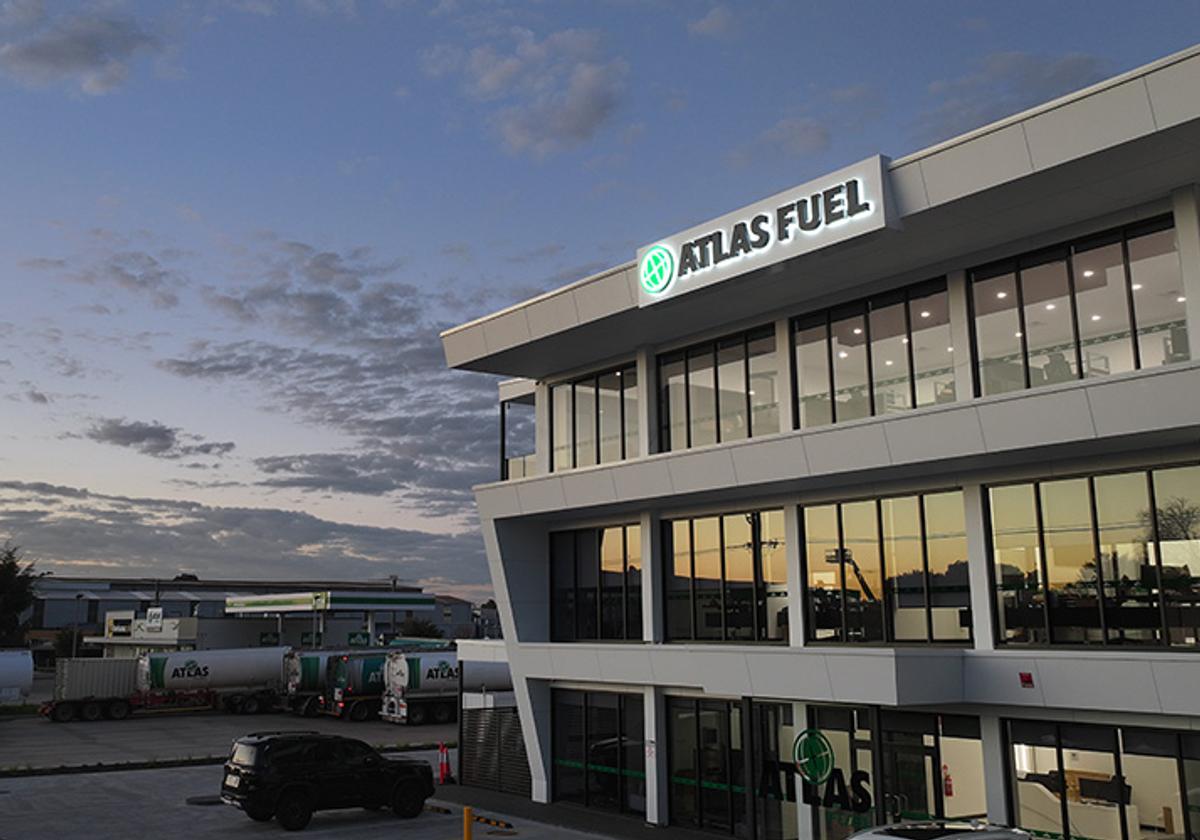
Use Atlas Fuel when the job looks like the work it runs. The company is Australian-owned, based at Kwinana Beach since 2010, with its own tanker fleet for mining, marine, agriculture and commercial sites. Supply is centred on Perth, Kwinana Beach and regional Western Australia, and reaches Queensland and Victoria on a planned lead time. Dispatch and the driver are the same business. The WA fleet holds WAHVA, covering fatigue, maintenance, and dimension and loading for the WA work that accreditation applies to. Queensland and Victoria sit under the Heavy Vehicle National Law.
Emergency cover is narrower than the map. Atlas provides 24/7 emergency onsite diesel across Perth, Kwinana Beach and regional Western Australia when the site can take the truck. ISO 9001 is the quality system for that delivery process. Test it on a disputed dip and on a weeping coupling: who attends, and how the spill is stopped and reported. Then apply the same landed build-up you would demand from any other bulk fuel supplier. A brokered cent with no freight line, a card with no tank, or a region those trucks do not run, needs a different ruler.
Send one file, on the same day, and ask for the answers in the same order.
Refuse a delivered cent that will not split into terminal, differential and freight. Keep the supplier who can repeat a drop that fits the ullage, on a truck the gate knows, and who can still move litres after the planned run has left. Match the supply options to the band you are in, then ask for the schedule. Litres you resell, rather than burn, belong in a distributor arrangement on their own price.
Straight answers to the questions site managers, fleet controllers and farm operators usually raise before locking in a fuel account.
Order from the dip chart and a physical dip. Stay inside safe fill, minus stock on hand, minus any load already on the road. A gauge a few hundred litres out will overflow a tight tank or leave the site short. Check it when the gap shows, and again near the high-level alarm. Keep a generator reserve and any water bottom out of the burn figure. Call at lead time plus a buffer, then buy only that morning's ullage.
Take a printed minimum by zone, with a separate fee or freight uplift under it. Metro minimums often sit in the low thousands of litres. Regional minimums follow the kilometres. The fee is fair when you asked for less than that minimum and the trip charge is real. It is a surprise when it first appears on the invoice, or when the supplier's compartment choice caused the shortfall. On the illustration used above, a $320 trip is 4 cents a litre at 8,000 litres and 16 cents at 2,000 litres. Lift the order, group the tanks, or pay the small drop on purpose.
The terminal, the series, that the AIP figure includes excise and excludes GST, the lag, the differential, and freight for that drop. Day-of-lift and a prior-week average diverge when the market moves, so the lag has to be written down. A fixed price hides which input changed, and it ages. You should rebuild the invoice from the published terminal gate price and the schedule. Keep waiting, after-hours and short-drop fees off to the side, and leave fuel tax credits out of the supplier's cent.
Treat the water as the tank's until a sample says it came from the compartment. Drain the sump if the tank allows it. Receive the load only if the remaining fuel is clear and there is genuine ullage. If the product is hazy, stop, isolate the outlet, and polish or pump out before any fresh diesel joins it. Doubt the truck as well and sample the compartment first. Label retains with the docket. The account should already say who pays the lab and which result rejects the load.
Particulate filtration and a water-absorbing stage on the dispense side, changed on differential pressure. Leave the fill strainer in place for debris. It will not polish the delivery, and neither will the tanker hose. Drain the water bottom. Common-rail pumps are less tolerant of water and hard dirt than older plant. Use an ISO 4406 target only where the site has specified one and can sample to it. On a bad receipt, hold retains and follow the testing path before that fuel reaches the rest of the fleet.
The docket and the tax invoice prove the purchase: date, place, grade, litres, supplier name and ABN. A separate use record splits off-road draws from diesel in heavy vehicles on public roads. Meter by asset, or document a percentage and review it when the work changes. Off-road use and on-road use in vehicles over 4.5 tonnes GVM attract different ATO rates. The on-road rate is generally fuel tax less the road user charge. Light vehicles on public roads generally sit outside the claim. Check the rate before the BAS, keep the papers five years, and treat this as record-keeping rather than tax advice.
A clock, a surcharge you can calculate, a gantry that is loading, and a driver with hours left. The site needs ullage, light, someone to open the gate and sign, and a current induction. Mines may require an escort. Farms may wait for daylight. Ask what can still move after the planned fleet has gone. Across Perth, Kwinana Beach and regional Western Australia, Atlas Fuel runs a 24/7 emergency path when the site can receive the truck. Queensland and Victoria are planned supply, on the lead time those runs need. A Friday that is urgent every week needs a new reorder, not a permanent night rate.
When the diesel goes into tanks in Western Australia, or into a Queensland or Victorian site that supplier actually schedules, and the cent rebuilds from a named terminal with the driver on the company books. Compare the same drop, ex GST: TGP, differential, freight, and the same after-hours rule. Atlas Fuel is that comparison from Kwinana Beach, on its own tankers, with WAHVA on the WA fleet. The 24/7 path covers Perth, Kwinana Beach and regional Western Australia. A card account with no tank, a brokered price with no freight line, or a district those trucks do not run, needs another ruler. Fleet control, on any of them, is who employs the driver and who pays if the gate sends the substitute away.


