
Who We Are
100% Australian owned and operated fuel company delivering excellence nationwide.
Read More All Services
 Find a StationOur Fleet

A fuel supplier in Perth is paid to put a named grade of diesel into a named tank, on a window the gate can hold, with a docket the invoice can survive. The metro is full of tankers. The proof is a Welshpool yard that is fuelled before the workshop starts, a Kewdale fleet that reconciles, and a regional tank that still has litres when the district is all ordering at once.
Bulk diesel Perth companies burn and bulk diesel a day or a week inland share a molecule and almost none of the run. Treat the corridor as part of the product. Start with where the truck has to go, the combination the road will take, and the hours the driver has left after the unload. The cent per litre is the last line, and it is a different line in Kewdale, Bunbury, Merredin, Kalgoorlie and Newman.
Western Australia's transport diesel is imported. The Kwinana refinery is gone. Product comes in by ship to the import terminals on Cockburn Sound, sits in the tank farm, and leaves by road tanker through the gantries. A late ship, a berth queue, a quality hold on a cargo, or a terminal on allocation is a supply event for the whole state. Any fuel supplier covering WA has to say which terminal they lift from, what happens to your litres when that terminal is tight, and how many days of cover you hold yourself.
A lift is a slot, a grade and a mass. Automotive diesel for the WA market sits under the national fuel quality standard, sulfur capped at 10 mg/kg, and it is handled as a combustible liquid. The gantry meter describes that morning at the rack. It does not describe a tank in Kalgoorlie three days later. A heavier batch hits the axle limit in fewer litres. Ask whether the docket shows observed litres or volume corrected to 15°C.
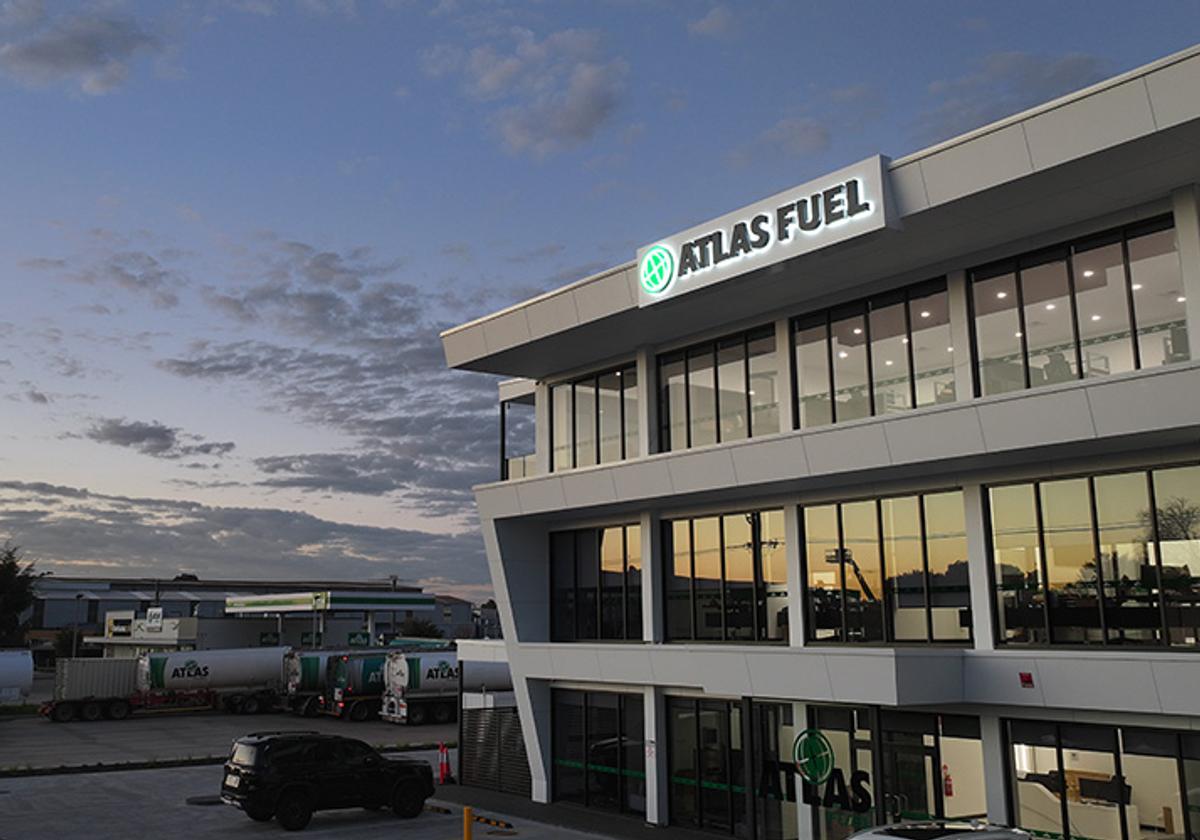
Atlas Fuel runs its Western Australian tanker work from 5 Mandurah Road, Kwinana Beach. Australian-owned, on that hub since 2010, with its own fleet. Trucks and the roster sit beside the terminals they load from. The person watching the gantry queue and the person who can move your truck are the same business. That does not create a slot. It gives you a yard you can name, and a fuel transport lead time you can test on your corridor.
A missed window on an owned fleet is a named dispatcher's problem. A fully brokered load is someone else's diary, and the driver is often missing from the induction list. Use a broker for an awkward one-off or a peak the core trucks cannot cover. Write the same induction lead time, the same hose and meter practice, and who carries the wait if the substitute is refused. Standing bulk diesel in Perth wants the own-fleet truck as the weekday plan.
Most Perth volume sits in a belt the freeway map makes look easy. Kewdale and Welshpool are the freight and workshop core: transport yards, fabrication, cold stores, concrete. Around them sit Canning Vale, Bibra Lake, Jandakot, Hazelmere, Forrestfield, Malaga, Wangara and the northern estates, plus Henderson and Naval Base. Off peak, the terminals to Welshpool or Kewdale are under an hour via the freeway and Roe Highway. On a weekday morning those kilometres sit in a queue, and a driver who burned the start of the shift there may not have hours left for a second drop you treated as free.
Metro onsite diesel dies on a locked gate, a changed code, a workshop trailer parked on the fill, or a fill point nobody labelled. Welshpool streets and older Kewdale lots were not drawn for a semi that has to swing out. Overhead power, a low awning, a reverse past forklifts, and a stormwater drain beside the coupling are ordinary. Some local roads carry night restrictions on heavy vehicles. If the drop has to happen before the neighbours' car park fills, say so in the order, not when the driver is on the street with the hazard lights on.
Photograph the coupling and measure the hose run before the first loaded truck. A fill point behind the workshop turns a fifteen-metre hose into forty, and the pump rate collapses. Mark diesel against waste oil, petrol and AdBlue. AdBlue never shares a diesel hose. One person owns the dip. Two supervisors ordering the same tank will double-fill it.
A metro rigid can do several drops in a day, so the minimum is often lower than a regional semi that has one chance to pay for the trip. The truck, the driver and the gantry slot still cost money. A 1,000 litre top-up into a yard tank is a different job from a scheduled bulk drop. Ask the minimum for that address and that vehicle. If working capacity cannot take it, change the tank, the frequency or the truck.
Keep utes and one-off highway fills on a fuel card. Put the workshop, the loaders and the trucks that sleep in the yard on the bulk tank. The card price is a retail or truck-stop price. The bulk price is landed wholesale. Averaging them hides which one is expensive. Tell the supplier which assets the tank is for.
Bunbury is under two hours from Cockburn Sound in clean traffic. Busselton is past two. Margaret River is closer to three before the driver finds the tank, and Manjimup or Collie are their own loops. Add the unload, a second stop and the drive home, and a solo day is full. Quoting those towns on the metro lead time books a truck that arrives inside someone else's fatigue limit, or does not arrive. School-holiday traffic on Bussell Highway moves the same run by an hour with nothing wrong at the rack.
The work is mixed in a way a Kewdale standing order is not. Bunbury port has berth windows. The hinterland has timber, civil jobs, quarries and farms whose burn jumps in season. A rigid for a Margaret River shed is the wrong tool for a full industrial tank in Bunbury. Write a dry-weather track note and a wet-weather one, including any low line at the shed. If the semi cannot turn, say so before vintage or harvest.
Marine work and farm work can share a supplier. They need separate promises. Marine fuel supply at Fremantle, Henderson or Bunbury is a tide, a berth and, inside a maritime security zone, a Maritime Security Identification Card for unescorted access. A farm tank is a gate and a track. If both sit on the account, the quote needs a lead time and a vehicle for each. One blended South West line is how the boat misses the tide.
Northam is about an hour and a half from the coast once you are clear of the metro. Merredin is about three hours. Narrogin, Wagin, Moora and Dalwallinu are their own highways, not a ring road. Most of the year a farm tank declines slowly. In seeding and again in harvest it does not. Air seeders, sprayers, headers, chaser bins and the trucks between them empty a tank that looked comfortable a fortnight earlier. Every farm in the district rings in the same week. The supplier who looked spare in March is not spare in May or November.
Size the tank for peak burn, not the monthly average. Working capacity, minus a water bottom, minus ullage, divided by peak daily use, is cover in days. Set that against lead time plus one missed run. Place a seasonal nomination, a reorder dip, and a phone path for the week harvest runs long. A standing fortnightly delivery is too much in June and short when the headers are going.
Bitumen to the mailbox is not the delivery. The delivery is the grid, the gate, the powerline, the soft corner and the pad. Many shire roads are not on the restricted-access network a B-double or a road train needs. Order the combination that is legal there and can turn at the shed. A cattle grid, dogs and a mobile that works in the paddock belong on the order. Contractors on the farm bowser need a book. The supplier fills what you order.
Atlas Fuel's agriculture work takes that seasonal flex on its own tankers, so a harvest order is a roster change rather than a search for a subcontractor after the district has already booked out. It only works if the tank, the track note and the reorder dip were in the file first. Agriculture fuel supply fails in the last kilometre more often than it fails at the rack.
Kalgoorlie is about 600 kilometres and six to seven hours' driving from Perth before a mine gate. Kambalda sits south of that. Leonora, Leinster and Laverton add hours north. A 7am call in Welshpool does not produce a truck at the grill tomorrow morning. The unit has to be loaded, the driver legal for the haul, and the site holding a current induction, a radio channel and often an escort to the fuel farm. Ask for recent drops on the corridor and a lead time in days, separate from the Kewdale rate.
A tank filled hard at dawn in Kalgoorlie can push product by early afternoon. Leave ullage. Dust finds a perished hatch seal and a vent in a poorly kept bund. Dip with water-finding paste before you blame the latest load. Mining fuel supply on this corridor lives on the induction and the shift window. The supplier learns those on a survey, not on the first live truck.
Newman is around twelve hours' driving from Perth on the map, before fatigue breaks. Port Hedland, Karratha and Tom Price are longer again. A fuel supplier on a WA corridor like this has to name the cycle: which days a truck is on the road, what combination is legal on the gazetted route, where the driver rests, and what volume pays for the round trip. A small top-up is often a full truck-day. If the tank cannot take a sensible drop, the quote is unfinished.
Cyclone season, flooding on the Great Northern and a ship delay can land in the same fortnight. During a real outage, cover equals the diesel already in the fuel farm. A phone call does not move a truck through a closed highway. Force majeure, notice and the shortage rule belong in the contract before the season, not on the morning the road shuts.
Western Australia sits outside the Heavy Vehicle National Law. An answer that only says NHVAS has not answered a WA delivery. The scheme that matters for operators who need it is Western Australian Heavy Vehicle Accreditation. WAHVA covers fatigue, maintenance, and dimension and loading. Main Roads publishes the restricted-access networks. A B-double, a double or a triple that is legal on a gazetted stretch of the Great Eastern or the Great Northern can be illegal on the shire road to the tank, and unwelcome on a metro street in Welshpool. Ask which modules apply to the vehicle booked for your address, then ask which combination they will actually send.
Atlas Fuel's tanker fleet holds WAHVA. Treat that as evidence of a system, then test it: lead time on your route, who attends a disputed load, and which unit is next if the booked truck is committed. Accreditation does not clear a driver missing from the site list. A mine gate and a shire road can both refuse a highway unit. Quote the combination that survives both.
The quote assumes a combination that can legally finish, including the wait. A Goldfields escort, a Fremantle queue or a Kewdale gate that holds a driver for ninety minutes can consume the hours meant for the trip home. Agree where the waiting clock starts: at the gate, at the fill point, or when pumping starts. A forty-minute escort eats a gate-started allowance before the hose is out. If the site regularly burns the free time, put that hour on the landed cent and give the roster the longer window.
Metro bulk diesel often makes the next cycle if the order hits the cut-off: load early, run the estates, and take a second lift only if hours and product remain. Miss it and you sit on the following board. The South West and the nearer Wheatbelt want a nominated day, because that truck cannot also cover a Malaga call at 2pm. Inland corridors sit on a cycle measured in days. A wet road that was open when you ordered moves the promise with the board.
Name who may order. Two supervisors on the same tank produce a double load or a truck with nowhere to unload. Standing orders suit a steady yard and a gauge one person reads. Call-offs suit civil jobs and farms whose use swings. Both need a cut-off in clock time. Gantry queues before a long weekend are predictable. Order into them.
Atlas Fuel provides 24/7 emergency onsite diesel across Perth, Kwinana Beach and regional Western Australia. The path is real, and it is not one response time. A Welshpool yard at 5am can be a legal driver, an open gate and someone to sign. A Newman call at the same hour, with no truck already in the region, is a haul. Test the number. Check the site will open: code, induction, light, spill kit. Emergency freight should cost more than a planned load. Weekly use means the reorder point or the tank is wrong for that corridor.
Once the truck is in position the job is hydraulics. Bulk hose is commonly 50 to 100 millimetres. A smaller bore hurts flow much more than a few extra metres of the right hose. Measure the run. Many tankers discharge with a PTO-driven or hydraulic pump, so the engine runs at a set speed while product moves. A site rule that wants the engine off needs a different setup, agreed before the day, not argued at the coupling. Gravity discharge only works where the elevation and the valves can hold a controlled rate. Camlock is common on farm and site tanks. The size still has to match. Start slow, watch the joints, then come up to rate.
If the vent is smaller than the fill rate, the tank burps, gauges lie and joints weep. A shut valve against a running pump cooks seals. Agree who may touch the tank valves. Somebody watches the level. Stop at safe fill: working capacity, minus ullage, minus any water bottom. Keep the hose off forklift paths and keep a spill kit at the coupling. Stay with the hose until the meter stops. Clear the hose into the customer's tank, then read the meter. Product drained back after the meter has counted it is a short delivery.
Diesel is sold in litres and loaded against a mass limit. Automotive diesel commonly sits around 0.82 to 0.85 kilograms per litre at 15°C. Volume moves with temperature. As a field rule of thumb, diesel changes by about 0.08 per cent for each degree Celsius. The proper correction depends on density and sits in the volume-correction tables to 15°C, the temperature Australian wholesale volumes are usually reconciled to. A load metered warm and dipped after it has cooled will look short. On a 20,000 litre drop loaded near 32°C and dipped near 18°C, that rule of thumb is about 1.1 per cent, roughly 220 litres. It is a reconciliation item. It is not automatically a missing compartment.
Ask whether the meter is compensated to 15°C or printing observed litres, and compare like with like. Dip again once the surface has settled. A long horizontal tank still moving will lie. Agree a band wide enough for gauge error and a normal temperature swing, tight enough that a wrong tank shows up while the driver is there. Clock gauges stick. Prove them against a manual dip on a schedule.
Product can leave the gantry inside specification and pick up trouble in a tired tank. Free water enters as the tank breathes, past a perished hatch, through a vent in a flooded bund, or from a compartment that was not drained. Water is heavier than diesel and settles. On the Wheatbelt and in older South West sheds that bottom is common. Microbial growth lives at the fuel-water interface. Filters that used to last a season block in days, and the product smells sour. Inland, dust and rust come in through tired seals. Cross-product comes from a manifold that last saw petrol, or a fill point nobody labelled.
Drain the sump on the interval the tank allows. A clean load pumped onto a water bottom does not remove it, and a low outlet sends that water to the machines first. Particulate and water-absorbing elements on the outlet, changed on differential pressure, are what a Kewdale workshop or a header actually needs. If a load looks, smells or filters wrong, isolate the tank and sample the tanker before the product mixes. A jar taken only after mixing cannot separate a dirty delivery from a dirty vessel. Disputed loads and a supplier change are when fuel testing earns its fee. Agree who samples, who pays, and what result changes the commercial outcome before anyone is angry.
The Australian Institute of Petroleum publishes weekday terminal gate prices for diesel. For a Perth and WA comparison the series that matters is Kwinana diesel, collected at that gate. On the AIP notes that figure includes excise and excludes GST. It excludes freight to your site, any supplier differential, waiting and a retail margin. A Melbourne or Brisbane number on the same morning is a different market. Name the terminal in the clause. A weekly average of Kwinana diesel, ex GST, plus a fixed differential, invoiced the following week, is a price you can rebuild. Day-of-lift pricing tracks a fast market and is harder to job-cost. State the lag.
Use 100.00 cents as the reference Kwinana TGP so the sums stay visible. Your live TGP will not be 100. Add a differential of 6.50 cents. A metro drop on an ordinary freight rate might add 3.80. Landed Kewdale or Welshpool is 110.30 cents ex GST. The same formula with an illustrated South West freight of 9.50 lands at 116.00. A Wheatbelt run illustrated at 12.00 lands at 118.50. A Goldfields haul illustrated at 18.00 lands at 124.50. A Pilbara round trip illustrated at 32.00 lands at 138.50. Same supplier, same diesel, twenty-eight cents apart because of the road and the drop. These freight figures are a worksheet, not a tariff. Your quote has to replace them with the rate for your address and your litres.
An email that says 112 cents delivered still needs the week, the drop size, the waiting clock and whether GST sits inside the number. A GST-inclusive quote is about ten per cent higher than the ex-GST build. Compare ex GST. Leave fuel tax credits out of the supplier's cent. Minimum-drop uplifts, waiting past the free minutes, after-hours and public holidays belong on their own lines.
Because the state is supplied by cargo, read the shortage rule before you like the differential. Some agreements protect contracted volume and cut spot buyers first. Some go pro-rata against recent offtake. Best efforts is the spot queue. Write the volume as monthly litres, a tolerance, and a date for nominating harvest or a shutdown peak. A fee on a reserved truck is a different deal from take-or-pay on the full landed price. A forecast the tank cannot accept becomes waiting time on the day.
Fuel tax credits hand back excise already in the diesel price, for eligible business use, through the BAS. Rates move. Excise is indexed, typically in February and August, and the on-road heavy-vehicle credit is reduced by the road user charge. Look up the current ATO rates when you lodge. Off-road business use, covering a lot of mining, agriculture, construction off public roads, marine and stationary plant, generally attracts the full credit rate. Diesel in heavy vehicles over 4.5 tonnes gross vehicle mass on public roads generally attracts the smaller credit. Light vehicles at or under 4.5 tonnes on public roads generally sit outside it.
A Kewdale tank feeding a loader and two highway trucks is the claim a review will look at. A farm tank feeding a header and a ute on the highway has the same shape. The docket proves purchase: date, product, litres, supplier. A use record has to split off-road litres from on-road heavy-vehicle litres. Meter the bowser by asset, or write a percentage and review it when harvest or a new highway contract moves the mix. Private haul roads and public roads are different activities. Keep the working papers for five years. The supplier can split dockets by site. Eligibility stays with you. This is operational orientation, not tax advice.
Atlas Fuel is a fair benchmark when the work matches the hub: bulk diesel into tanks in Perth and regional Western Australia, on trucks the supplier employs, across mining, marine, agriculture and commercial yards. Queensland and Victoria are on the stated supply list. Confirm the site before you assume the same trucks. ISO 9001, ISO 14001 and ISO 45001 are the audited quality, environmental and safety systems. On a Welshpool estate the environmental one meets a drain and a neighbour. On a mine the safety one meets site rules, which still win when they are stricter.
Give every fuel supplier the same brief and score fleet control, corridor lead time, accreditation of the actual truck, quality process and after-hours region beside the cent. The wider buying guide is there when you want the full comparison. Rank the landed ex-GST result for the drop you will actually take. Then price a missed load in stopped plant, a lost tide or a harvest day.
Straight answers to the questions site managers, fleet controllers and farm operators usually raise before locking in a fuel account.
Check tank identity and whether the ticket is compensated to 15°C while the dip is observed volume. About 0.08 per cent per degree is the field gap. On 20,000 litres, a fall from the low thirties to the high teens is on the order of 200 litres. Let the tank settle, check the water paste, and re-dip. Outside the agreed band, keep the driver there and hold a retain.
Treat the water as the tank's condition. Drain the sump if you can. If you cannot, isolate the machines and pump out or polish before the hose starts. A low outlet sends that water to a header first. If the compartment is also in doubt, sample before discharge and use the testing path already written into the account.
Atlas Fuel's 24/7 emergency onsite diesel covers Perth, Kwinana Beach and regional Western Australia, and the truck still has to be legal and in range. A metro yard can be an open gate before the shift. A Pilbara or remote Goldfields call with no unit already on that corridor is a haul, and it stops when the highway is closed. Weekly emergency freight means the reorder point is wrong.
Change the tank, the frequency or the vehicle. Metro minima can sit lower because a rigid may do several drops in a day. A Wheatbelt, Goldfields or Pilbara trip has to pay for the empty kilometres, so the minimum sits higher. Put working capacity, ullage and the peak week in the brief so both suppliers price the same constraint.
Name Kwinana diesel, excise in, GST out, the differential in cents per litre, and the lag. Freight needs its own line for each corridor and drop size. Add minimum litres, where the waiting clock starts, after-hours and public holidays. You should be able to rebuild the invoice from the published terminal gate price and the schedule without a phone call. Leave fuel tax credits out of that cent.
Fit particulate and water-absorbing filtration on the dispensing side, and change elements on differential pressure. Draining the water bottom does more for a common-rail engine than a finer element downstream of a wet sump. Coast and farm sheds grow slime at that interface. Inland, watch hatch seals and dust. If a fresh load blocks filters, isolate the tank and sample before it reaches the fleet.
Keep the docket: date, product, litres, supplier. Keep a use record that splits off-road draws from diesel used in heavy vehicles on public roads. Meter by asset, or write a percentage and review it when the mix changes. Off-road and on-road heavy-vehicle use attract different ATO rates. Light vehicles on public roads generally sit outside the claim. Check the current rates before the BAS and keep the papers for five years.
The supplier who sent a truck the gate had never cleared, unless your gate caused the delay. Approve names and combinations ahead, keep a backup driver inducted, and own the wait if the replacement is refused. WAHVA does not induct a stranger. Put the same rule on a brokered cartage sheet. A unit that is legal on the highway can still be the wrong unit for that pit.


