
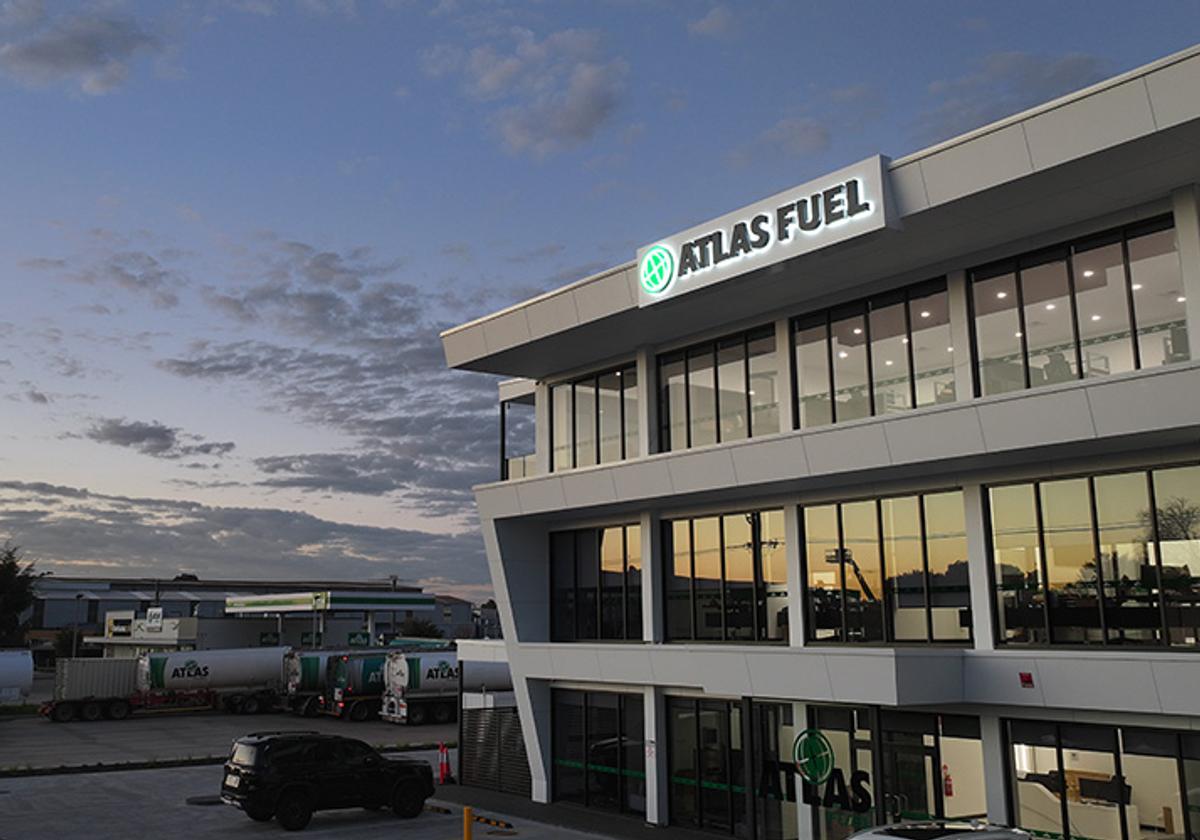
Who We Are
100% Australian owned and operated fuel company delivering excellence nationwide.
Read More All Services
 Find a StationOur Fleet

Western Australia runs on diesel. Haul trucks and processing plant in the Pilbara and the Goldfields, seeders and headers from the Geraldton sandplain to the Esperance mallee, machinery on iron ore and grain berths, linehaul freight, and generators that power communities far from a servo all burn the same product. None of those operations can wait out a late ship or a congested rack. When the tank reaches the unusable heel, the work stops. The fuel account is an uptime account. Shipping and wholesale uncertainty matter because they arrive at that tank.
Public comment sometimes borrows the language of a crisis and puts a multi-billion-dollar label on the exposure. The industries that burn the diesel are large, and a stoppage inside them is a production loss, a missed shipping window or a header sitting in a paddock. A site cannot manage a headline. It can manage days of cover, a carrier it can name, and an order released while the tank still has room for the truck. That is the self-reliance available to a buyer who will still be purchasing imported diesel at the end of the year.
The fantasy version of self-reliance is a regional tank that has left the global market, or software that has replaced the truck. Nobody at a Wheatbelt shed or a Pilbara fuel farm is about to refine crude, and a model cannot berth a ship. Practical self-reliance is storage sized to the road and to the burn that is coming, a local tanker fleet whose trucks, hours and site approvals can be inspected, and ordering information good enough that someone on shift buys fuel while the gauge still shows days of cover.
Industry talk often files this subject under automation. The automation that changes a Western Australian fuel account is already ordinary: a gauge someone may act on, a reorder rule that expires when the season changes, a dispatch board that can see ullage and driver hours together, and a docket a second person can find. Arrangements for fuel supply remain a terminal lift, a heavy vehicle, a meter and a tank the customer controls. The discipline sits around that sequence.
The state's dependence is several burn patterns sharing one product. A mine fuel farm can draw every hour the plant is running. A broadacre farm can sit quiet for weeks and then empty a tank in a seeding or harvest fortnight. A port tenant can need product between vessel moves, inside a security window. A linehaul depot splits its need between a yard tank and vehicles that never come home. A remote community may run generators as its power station, with resupply measured in a long road or, for some coastal and peninsula places, a barge window.
Mining is the continuous case. Haul fleets, drills, processing plant and, on many remote operations, power generation all sit on diesel. A planned shutdown drops the burn, and the restart lifts it, often while workshops and contractors are still drawing from the same farm. The tank that looked comfortable on the last week of maintenance can be short on the first full production shift. A truck that is legal on the public road can still wait at a grill because the site approval named a different driver. The litres count when they can pass the gate.
Agriculture is the spike case. A program sized for a quiet month will understate seeding and harvest by a wide margin, and the dates move with the district and the year. Contractors bring extra machines onto a property that had been comfortable with its own plant. The shed tank is often one shell, with a heel the pump will not pick up cleanly and little room for a second load if the first was ordered late. Pastoral stations add distance. A single seasonal drop can be the whole plan.
Ports, freight and remote power sit between those patterns and sometimes combine them. Shore tanks feed port plant on a clock set by the vessel. Bunkering a ship is a different job from filling a shore tank, with a tighter window and a different measurement argument, and the two should be written up as separate deliveries. Freight yards keep linehaul moving and still send vehicles onto the public network. Communities and stations that generate their own power treat diesel as an essential service. Buyers of commercial diesel across these sectors are purchasing one molecule into burn patterns that a single reorder percentage will misread.
Australia imports most of the refined diesel it uses. That structural fact does not need a guessed volume to be useful. Western Australian buyers meet it as a coastal gate and then a road. When a cargo slips, a terminal is tight, maintenance takes a rack out, or the wholesale benchmark jumps and many buyers try to lift in the same week, the product has not failed as chemistry. The timing has failed. Regional sites feel the timing first because they have the least spare time between the gate and the engine.
The wholesale layer can be watched. It cannot be steered from a mine or a farm. The Australian Institute of Petroleum publishes terminal gate prices for diesel on business days at the major gates. Buyers use that series as a reference for a load collected at the terminal. On the AIP's own framing the figure includes excise and excludes GST. It excludes freight, any supplier differential, waiting, and time on the customer's pad. A site that treats the published gate price as its delivered cost will misread an unsettled week, because the unsettled part is often the road and the queue.
In the south-west, bulk lifts are centred on the Kwinana terminal precinct. That precinct is an import gate, not a refinery still running on the old Kwinana site. Perth and Kwinana supply starts its clock there for a large share of southern and inland work. Northern operations, pastoral leases and remote communities then inherit whatever road, port or barge leg sits beyond the gate they actually use. Distance multiplies a delay. A late lift that a metro yard can re-time inside the week is a missed shift for a site that needed the truck to leave yesterday.
A Goldfields run is a long day from the Kwinana gate before the mine entrance, the induction and any escort are counted. A Pilbara run is longer than one ordinary driving shift. Kimberley resupply can turn on a road the wet closes, or on a barge that does not sail to suit a gauge. Those facts sit under every conversation about fuel transportation. The load has to exist at a terminal, the vehicle has to be legal for the road and the site, and the driver has to have hours left under the fatigue arrangement they are actually on.
Wholesale uncertainty and local congestion travel together. A move in the benchmark, a tight allocation, or a rumour of tightness will pull forward orders that would have been spread across a fortnight. Harvest does the same thing without any rumour. So do seeding, the restart of a mine after maintenance, and the first credible cyclone advice of the season, when northern sites try to fill before roads and ports become the constraint. The rack, the driver pool and the accredited vehicles are finite. A buyer who was reliable in a quiet month can wait behind a queue they did not create.
Weather and the calendar stack on the market. The northern cyclone season, as a planning window, runs from about November to April. Wheatbelt harvest commonly falls in spring into early summer, and seeding in autumn into early winter, and both move when the rain moves. Harvest traffic, a highway closed by water, or a port disrupted by a cyclone inserts days into a lead time that a reorder point copied from July never included.
Some inputs will not move because a supervisor wants them to. The international diesel benchmark, the sailing and berthing of a cargo, another customer's draw on the same gate, terminal maintenance elsewhere, excise, and the published gate price sit outside the fence. A contract can assign price risk and set a method for freight. It cannot manufacture litres the terminal did not release, and it cannot put hours back on a driver who has used them. What a fuel supplier controls is a different question from what the site controls. The supplier can be accountable for the truck, the grade, the meter and the docket.
Inside the fence the list is practical. Days of usable cover. A reorder point that changes with the work and then expires. A named person who may order, a deputy, and a limit on what either may release after hours. Ullage checked against the inbound truck, with open orders counted once. Inductions, gate contacts and receiving hours kept current. A grade written on the order, including any biodiesel limit the engines on site are approved to burn. A dip or a fresh gauge recorded often enough that a stale screen cannot pass as knowledge. A carrier appointed before the peak, with trucks that can be named.
Appointment is its own job. How to choose a fuel supplier covers whether an operator can physically do the work. Choosing a bulk supplier narrows that judgement to drop size, tank fit and the landed load. This page starts once the site is building the buffer, the fleet fact and the ordering file that make an appointment mean something in regional WA. A name on an account without those three is a phone number. A phone number is not days of cover.
Holding more diesel does not take a site out of the import market. It decides how many days of that market the site can miss. A shell sized for a metro habit, where a truck can turn around inside a day, is a different design from a shell that has to absorb a Goldfields lead time, a harvest spike or a northern weather window. The useful question is whether usable litres, divided by the burn that is coming, exceed the lead time plus one missed window.
Usable litres are smaller than shell capacity, and the gap is where reorder points go wrong. There is a heel the pump should not be asked to pick up. Free water sits under the product and can make a careless total look like a gain. A maximum safe fill has to leave room so a delivery does not wet the vent. Usable cover is what remains after those items are respected.
Height becomes litres only through the calibration chart for that shell. A horizontal tank does not give the same litres per millimetre near the bottom as it does at mid-height. Temperature sits in the same reading. A hot afternoon can add apparent litres without a delivery. Store level, temperature and water, and convert with the chart. Where the commercial record uses volume corrected to 15 degrees Celsius, keep the observed reading beside the corrected one so a warm ticket and a cool dip are not treated as a loss of product.
A reorder point copied from an average month is how peaks and shutdowns go wrong. For a broadacre shed, build the harvest and seeding points from the burn of those programs, including contractors' machines if they draw from the same tank. For a mine, split the maintenance drawdown from the restart. The drawdown wants a hold on automatic replenishment so the system does not refill a shell the site is emptying for work on the tank or the bund. The restart wants cover rebuilt before the fleet returns, because the first production days are often a surge. A generator day tank needs its own alarm points, so a failed transfer is not hidden by a comfortable bulk gauge.
Extra steel is an approval and a procedure, as well as a purchase. Automotive diesel supplied to the national fuel standard is produced with a flash point at or above 61.5 degrees Celsius. A liquid above 60 degrees Celsius generally sits outside Class 3 for transport under the Australian Dangerous Goods Code, so a diesel-only movement is a different licensing question from petrol. Storage and handling still follow the combustible-liquid rules that apply to the site, including bunding, separation and spill equipment under AS 1940. A bigger tank the pad cannot accept, or a second shell with no chart and no owner, is an incomplete buffer.
Stock ties up working capital, and water, heat and time are a quality watch. A nervous half-order can also cost more in freight than a planned full drop. What a bulk drop costs separates gate price, differential, freight, waiting and after-hours lines. None of those lines is a reason to hold so little that one delayed truck stops the work. Compare the cost of the buffer with the cost of the stoppage it is there to avoid: a header fleet idle, a haul circuit parked, or a generator short of fuel. Make the comparison with the site's own burn and lead time.
Order size belongs with the buffer. Bulk diesel delivery only works when the tank can take the vehicle that is coming. A reorder point that leaves less room than the lane's practical drop produces a refused load, a short load, or a truck waiting while someone finds room. Check ullage before release. Do not leave two live orders against one shell unless the room covers both.
Storage without a truck is a tank. The second half of practical self-reliance is a fleet that can be dispatched because it exists. In a tight week the subcontracted market is the same market everyone else is calling. A standing arrangement with named vehicles, named fatigue arrangements and site approvals already held will move before a fresh search through a broker's book.
A local fleet can be the supplier's own tankers or a short list of subcontractors the site has already approved. The test is whether dispatch can say, before release, which company employs the driver, which accreditation that driver is operating under, whether insurance is current, and whether this person may enter the site. A line that says only accredited has not named the module. A fuel distributor who can answer from a roster is in a different position from one who starts ringing around after the order. How a diesel supplier is organised is worth reading beside that roster. The word distributor covers businesses that lift and deliver with their own equipment and businesses that arrange someone else's.
Western Australia sits outside the Heavy Vehicle National Law. Where concessional access depends on accreditation, the scheme is Western Australian Heavy Vehicle Accreditation: fatigue, maintenance, and dimension and loading where the combination needs them. The limit on the driver's day is the constraint a route plan has to respect. In states under the national law the matching conversation is the national scheme, module by module.
The receiving window is the other clock. A truck can be legal, loaded and on time, and still fail because nobody is there to receive, the induction has lapsed, the escort was not booked, or the tank is locked. After-hours supply is a written authority. Name who may call, which tanks they may fill, what volume they may release without a second signature, and how a night load is dipped and filed. A night desk that sends a truck to a closed gate has moved the failure to a time when fewer people are present to fix it.
The ordering file is what people are reaching for when they say automation and still want fuel on Tuesday. Better information is a short set of facts, fresh enough to act on, in the hands of a person who is allowed to place the order. If the facts are late, or the person is on leave with no deputy, a careful tank design still ends as a phone call made too late.
A tank gauge is a measuring instrument with a communications problem attached. The figure that should drive a reorder is usable diesel, from the chart, with water kept separate, from a reading that is still alive. Remote sites are where the instrument earns its keep and where it fails in ordinary ways. Mobile coverage on a Wheatbelt farm, a pastoral track or the back of a fuel farm is often one tower and a tank on the wrong side of a shed. A stale reading has to block an automatic order, and someone still has to dip.
The dip needs a name and a time. So does the authority to turn the number into a load. A low alarm sent to a shared inbox, with nobody named as the person who orders, is a graph. A standing onsite diesel delivery on a rhythm the tank can accept will prevent more stock-outs than a sensor that creates an urgent load every Friday. The probe should catch the week that breaks the rhythm. Filling a fixed tank and refuelling machines are different jobs, set out in the notes on onsite refuelling.
Reorder rules have to know the calendar. A setpoint built on July burn will cross into trouble during harvest or a restart before a truck from the coast can arrive. A setpoint built on harvest will keep ordering through autumn and tie up working capital the site is not drawing. The change of setpoint should name the burn it assumes, the person who may alter it, and the date it dies. When it dies, the file returns to the base point unless someone extends it in writing.
Open orders sit inside the rule. The gauge does not know that a load left the rack this morning. A reorder that looks only at the shell will call a second truck for product already on the highway, and the second truck will meet a tank that cannot take it. Store the lift day and the expected arrival as different facts, store the vehicle size, and deduct the open load from the apparent deficit before anyone releases another order. A late load remains open. Marking it complete because it left the terminal makes the site look healthier than it is.
A burn history the site actually recorded, adjusted for a known shutdown or a known harvest, is a better guide than memory. The limit is the input. A model fed with stale gauges, missing contractor draws and a single average month will recommend the reorder that average month would have wanted, and it will sound confident. Confidence is not ullage. An artificial-intelligence slogan does not replace a truck, a grade and a phone number that answers. Software does not create product at a tight terminal, restore a driver's hours, or enlarge a shell.
A mine fuel farm is several tanks, sometimes more than one grade, a day tank for power, contractors who must not share an untagged bowser, and a shift pattern that does not stop at five. Mining fuel arrangements fail in the gaps: a bulk delivery posted to the wrong tank, a restart planned on a buffer that was burned during maintenance, an induction pack that names last year's crew. The notes on mine-site diesel delivery go further into inductions, remote haulage and urgent supply. For uncertainty, the mine-specific control is a status on the tank that anyone who can release an order can see. Shutdown, restart, normal and hold.
Before seeding and again before harvest, write down the expected daily burn, the contractors who will draw, the smallest drop the lane will actually run, and the days a truck needs from the gate the supplier lifts from. Farm diesel supply is that arithmetic plus a track the tanker can use in the weather that is coming. Farm delivery covers access, on-farm tanks and timing in more detail. The uncertainty point is collision. The farm's peak is also the neighbour's peak. Ordering when the header is already thirsty puts the property in the same queue as every other property that waited.
Shore-side port plant and marine fuel should stay separate in the record. A shore tank has ullage, a chart and a receiver. A bunker or a barge drop has a vessel, a tighter window, and soundings that have to be written with the meter and the product temperature. One delivered figure with no temperature starts an argument the next tide will not wait for. Tenant equipment inside the port adds a security window on top of the fuel window. The workable version is a tank and a pre-booked slot.
Mixed yards need two supply paths and a rule for which litre belongs to which. Fixed plant, forklifts and generators belong on bulk into a tank the site controls. Vehicles that never return belong on a fuel card, used at retail fuel sites or at card-accepting depots, with the receipt tied to the vehicle. Bulk delivery and servo fuel should stay a comparison. Where fuel tax credits are claimed, the record has to show who acquired the litre and whether the use was off-road plant or a heavy vehicle on a public road. Eligibility stays with the Tax Office rules and the claimant's own advice.
A buffer of the wrong product is not cover. State the grade on the order, including any biodiesel limit the engines and the storage are approved for. Diesel grades are a specification conversation. When a load is in doubt, quarantine the tank rather than drawing it into a critical engine or diluting the doubt with the next delivery. Fuel testing is there for the argument a dip and a smell cannot finish. Diesel quality checks set out what a business can reasonably ask to see: a certificate for the batch, a sample both sides accept, and a retain held long enough to mean something.
Water is the quality issue regional tanks meet most often, and it disguises itself as stock. A rising water bottom can look like a gain in total liquid. In a warm shell, water also feeds microbial growth that shows up later as blocked filters. Check water as its own line and deal with it under the site's procedure, rather than ordering diesel to dilute it. A reorder rule that watches only total liquid will buy product the tank did not need and leave the water where it was.
Price facts need the same separation. The gate price on the day of lift, the differential, the freight, any waiting or after-hours line, and the day the tank was dipped are different numbers. One timestamp cannot serve a price formula and a stock account. Store both days. Compare landed cost on a full load for the real lane.
The sites that cope with an uncertain fortnight are rarely the sites with the newest screen. They can open one file and answer a short list without ringing three people. Build it before the peak if the arrangement is new. If the arrangement is old, build it from the last season's dockets, dips and invoices, and mark every line the paper does not prove. A contract the yard has never seen is not a file.
Use the file when something moves. A benchmark jump is a reason to check cover against lead time, not a reason to buy a load the tank cannot hold. A cyclone watch in the north is a reason to fill towards the safe line while roads and ports are still open, and to confirm a receiver will be there. A harvest forecast is a reason to raise the reorder point and confirm the carrier still has the vehicles and the inductions. A mine shutdown notice is a reason to hold replenishment and to schedule restart loads against the fleet that will actually return.
A tidy file does not remove the truck. Atlas Fuel is based at Kwinana Beach and runs its own tanker fleet for bulk and onsite diesel in Western Australia. The business states ISO 9001, ISO 14001 and ISO 45001 for its management systems. Those statements describe how the operation is managed. They are not a promise that a ship will berth, that a rack will be clear, or that a regional tank cannot run low. Sites that want bulk or onsite supply lined up with the buffers, windows and records they already keep can contact the business and talk through tanks, lead times and who is allowed to order. Bring the file. The useful conversation is the litres the site can hold and the road a truck can legally run.
It changes the timing. The product in the shell is still refined diesel bought through a terminal, and Australia remains a major importer of that product. Extra usable litres mean a late cargo, a tight rack or a road closure can slip by a measured number of days without stopping the work. They do not set the benchmark or guarantee the next lift. Size the buffer from the burn that is coming and the real lead time, then review it when the season, the fleet or the resupply route changes.
Divide usable litres by the burn you are about to have, and compare the resulting days with lead time from the gate you actually lift from, plus a margin for one missed window. Use the peak rate if a peak is coming. A metro yard that can re-time a load inside a day is a poor template for a Goldfields fuel farm, a Wheatbelt shed or a northern community tank.
Treat the tank as unknown. Do not let an automatic rule place an order, or suppress one, on a stale reading. Dip the tank, record the time and the person, and compare the dip with the last good reading and with any load that should already have landed. If the gap is larger than the site's usual tolerance, hold the reorder until the cause is clear: a delivery never posted, a transfer into a day tank, a water bottom, a leak, or a probe that has drifted.
A named subcontractor with current accreditation, insurance and site approval can be a legitimate part of a lane. A search that starts when the market is already tight is not a fleet. Ask which company employs the driver, which fatigue arrangement that driver is on, and whether the induction is held by that person. In Western Australia the accreditation question sits under Western Australian Heavy Vehicle Accreditation, because the state is outside the Heavy Vehicle National Law.
They should not. Change the point before seeding, before harvest and before a restart, using the burn and the lead time of that period, and name the person allowed to change it. When a mine is drawing a tank down for maintenance, hold automatic replenishment so a low alarm does not refill a shell the site is trying to empty. Rebuild cover against the restart, which is often a surge, and make the first load after the hold a human decision checked against ullage.
Write the dip time, the person, the usable litres, any water check, and the open orders already released for that tank. Keep the day the product was lifted at the terminal separate from the day it is expected to arrive, particularly where the price uses the terminal gate price on the lift day. A late load stays open. Marking it received because it left the rack makes the tank look healthier than it is and can trigger a second delivery the ullage cannot take.
Cards suit vehicles that do not return to a yard tank. They do not fill a mine fuel farm, a harvest shed, a generator day tank, or a machine that cannot leave the pad. Many Western Australian sites need both: bulk into fixed storage, and a card for the roaming fleet, reconciled as separate streams. A card receipt is not ullage, and a pump price is not a delivered bulk price. Where more than one entity draws from one tank, tag the draw to the entity and the use at the time.


