
Who We Are
100% Australian owned and operated fuel company delivering excellence nationwide.
Read More All Services
 Find a StationOur Fleet

A fuelling partnership has to work on a Tuesday afternoon, when the tank is below the plan and the person who signed the contract is elsewhere. Appointing a supplier is a different job: specification, price construction, the tax file, and whether the operator can physically do the work. That judgement sits in the deeper technical guide to choosing a fuel supplier. This page starts once a name is on the account. It is the operating file: coverage that can be dated, a rule for whose truck may come, a buffer both sides have signed, a way to finish a quality argument, a landed price that can be audited, a night desk with written authority, records a fuel tax credit claim can stand on, and inductions still current when a load is released.
The file is records, not a line on a rate card. A mine, a broadacre farm, a port tenant and a metro depot will not fill every line the same way. The lines still have to exist. A blank is the partnership running on memory, which fails when the usual receiver is on leave, the driver is out of hours, or an invoice arrives with a charge nobody can place.
Opened cold, the file answers a short list. Which sites, tanks and product. Who may order, and up to what volume. Which carriers are approved, and whether a brokered truck is allowed. What lead time and buffer apply this season. How a disputed load is sampled, held and paid for. What an invoice may contain. Who answers after hours, and what they may release. Which inductions expire before the next load. None of that replaces a specification, a dangerous-goods duty or a tax ruling.
Each item below needs a date and a named owner. A shared inbox is not an owner. Build the file before the first standing order if the partnership is new. If it is old, build it from the last three months of dockets, dips and invoices, and mark every line the paper does not prove. A contract the yard has never seen is not a file.
Coverage is a lane, not a coloured map. A lane has a terminal, a road, a vehicle legal on that road, a site window, and a recent date on which those four were true together. A redacted docket that shows that shape is evidence. A shaded state on a slide is a drawing.
Score metro, regional and remote sites apart. A Perth yard and a pastoral lease are not one lead time. The yard may be a same-day rigid or semi. The lease may be an overnight run or a smaller truck because the last kilometres are not a B-double route. Write the configuration the pad and the network both accept. A price that assumes a B-double on a farm track will be rewritten the first time a truck is turned around.
Ask which terminal the product lifts from, the kilometres, and the road time the supplier will stand behind in ordinary weather, then what that time becomes on a Friday, before a public holiday, and when the site only receives inside set hours. Brochure figures of 24 or 48 hours are not the lead time. Lead time runs from an authorised order to a hose that can legally go on the tank. Cut-offs, rack slots, driver hours and the gate do that sum.
Write the Friday case, because it breaks averages. An order at 15:30 can miss the cut-off, the rack may not load until Monday, and a site open only from 06:00 to 14:00 may not see the hose until Tuesday. A buffer built on 'next day' is short by the weekend. Record the worst ordinary gap. Weather and a road closure are the missed cycle on top of that gap, not a reason to keep describing the lane as a 24-hour job.
A lane that was real in March may be a subcontract nobody holds in November. Refresh the evidence on a set date. A redacted docket or dispatch extract is enough: terminal, date, volume, vehicle type, and whether the truck was the supplier's or a named carrier's. You do not need the other customer's name. For mining camps, and for farms in seeding or harvest, ask for a peak lane, not a quiet week. One metro drop does not prove a remote run. A July delivery does not prove a harvest fortnight.
A list of services is a menu, not proof a pad is on a run this month. Treat the lane register as the order. If a lane is only confirmed on enquiry, write that, and do not size the tank as if the truck were rostered. A depot tank, a day tank and a generator can share a pin and still need different receivers. A lane with nobody to meet the truck is a vehicle parked at a grill. A backup supplier is not live until the same proof exists. A tender name with no truck and no expiry will be missing on the day the primary supplier misses.
Before the load is picked up, say who owns the tanker and who employs the driver. Those are different facts. A supplier can own the account and broker the cartage. A carrier can own the truck and still be outside the site's approved list. The failure mode is a vehicle at the gate whose maintenance, fatigue module and induction sit in a business the site has never seen.
Own-fleet supply puts the roster, the vehicle and the account in one place, so an incident has a short path. Brokered supply is a normal way to cover a peak, a breakdown, or a lane not run every week. It is acceptable only when, before loading, the carrier is named, the site has approved that carrier or a written class of carrier, and the induction and insurance are current. It is not acceptable when the name is news at the grill.
Accreditation follows the driver and the vehicle, not the logo on the account. Western Australia sits outside the Heavy Vehicle National Law, so a concessional arrangement there is Western Australian Heavy Vehicle Accreditation, module by module: fatigue, maintenance, and dimension and loading where needed. Under the national law the match is the National Heavy Vehicle Accreditation Scheme, again by module. Record the module this driver is on. 'Accredited' alone does not say whether hours remain for the return.
Road time is a cost and a fatigue limit. Fuel transportation that meets the kilometres and misses the hours is not a plan. A required rest or driver change sits inside the lead time. Bonding lead, extinguisher, spill kit, chocks, hose length and meter type apply to the truck on the day, whoever owns it. A prime contractor's procedure does not follow a subcontractor's vehicle. If the truck fails the written standard it does not enter, and that refusal is the missed cycle the buffer was built for.
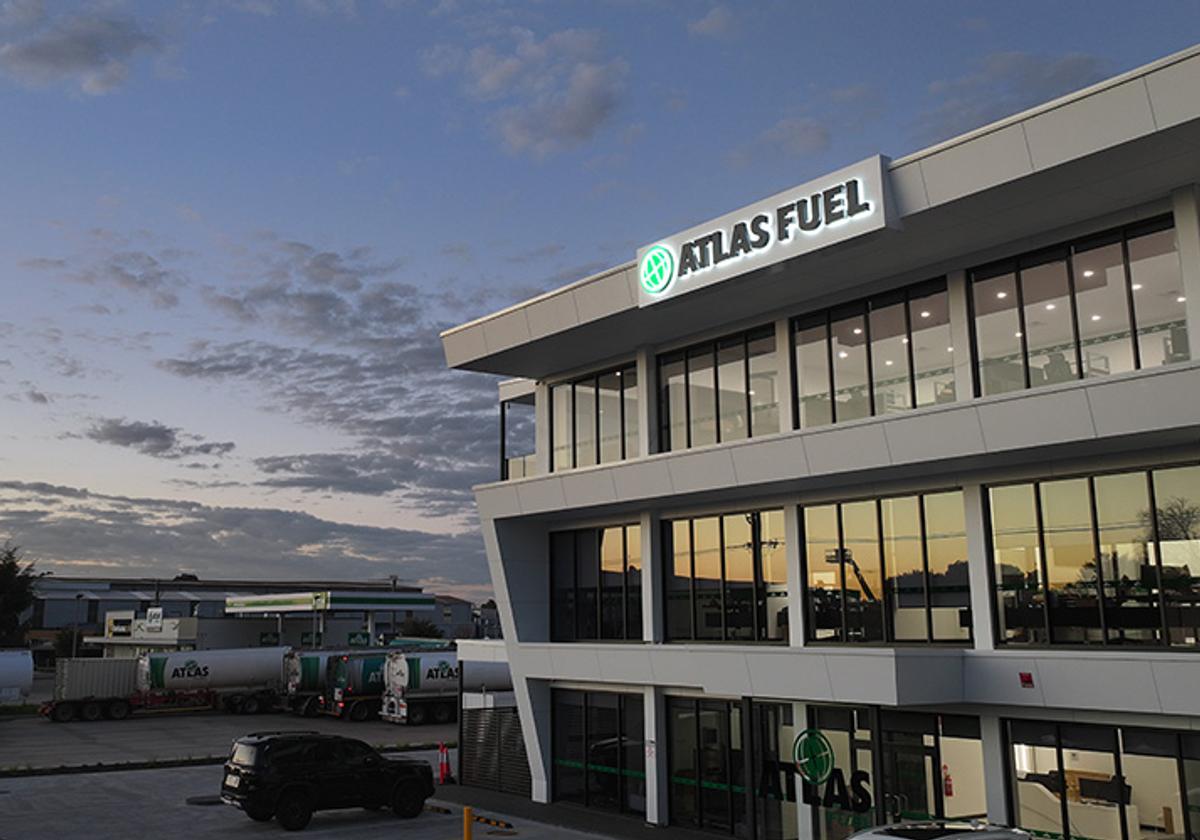
Where the supplier runs its own vehicles, accreditation and maintenance can be read as one system. Atlas Fuel runs bulk and onsite diesel on its own tanker fleet from Kwinana Beach, and states ISO 9001, ISO 14001 and ISO 45001 for its management systems, with Western Australian Heavy Vehicle Accreditation on the vehicles that require it. A lane register can test that shape. It does not retire the register. An overflow truck still has to be named before it is loaded.
Certificates of currency should name the insured, the cover the site requires, and the expiry. Public liability, motor, and pollution cover, where the site asks for it, are separate documents. Diary the expiry as a dispatch block. A lapse on Sunday is not fixed by a promise to email the renewal after the truck has left.
The buffer is diesel the site can still use if the next load is late. It is not shell capacity and not a gauge percentage. Usable product sits above the heel, above free water, and below the fill that keeps the vent dry. Only that vessel's calibration chart turns a dip into litres. A chart drawn before the tank was moved, re-floored or tilted no longer describes the tank.
Build the reorder point from this season's peak daily use and the lane's real lead time, including the Friday-to-Tuesday gap when that is the worst ordinary case. Add one missed cycle: a rejected induction, a road closure, fatigue, a rack delay, or an absent receiver. Measure the result above the heel. If dips record total liquid, raise the reorder dip by the heel, or the stock looks safer than the pump can pick up.
Keep the argument numerical. Peak burn 6,000 litres a day, lead time two days, one missed cycle a further two days: reorder at 24,000 litres above the heel. A 1,500 litre heel is not cover. A safe fill of 50,000 litres leaves 48,500 usable on a dry tank. A 20,000 litre inbound fits. A 30,000 litre minimum does not, because 24,000 plus 30,000 exceeds 50,000. Change the vehicle, accept a higher reorder with thinner cover, or shorten the lead time, and write which. Leaving all three untouched fails the week the rack slips.
Seasons expire. A harvest or seeding burn on an agriculture account, a mine campaign, and the draw after a shutdown are different buffers. Date the seasonal figure so a harvest setting is not still filling tanks in a quiet month. Only someone on the authority list may change it, and only in writing.
A standing onsite delivery on days the tank can accept beats a panic load each time a gauge crosses a line. Write the days, the hose-on window, and the volume that fits ullage. Do not send a load the tank cannot take, and do not leave two orders open unless both fit. A large minimum into modest ullage either crowds the vent or forces the site so low that one miss stops the work. Price a smaller truck as its own line, and put any short-load adjustment on the price sheet.
A total-liquid gauge will report a rising water bottom as stock. Name who dips, and what depth holds the next order. That hold has to be visible to the person releasing trucks. Changing partner, or adding a second supplier to the same tank, needs overlap of at least one buffer. Keep the outgoing supplier able to deliver until an incoming load has been accepted. Agree who owns the heel first. Customer-owned stock is an opening dip. Consignment stock is settled or removed, or the dip matches neither invoice.
Agree the dispute path while the tank is healthy. A path invented at the hose, with hours running and the pit waiting, is an argument without a sample. Each docket shows the product on the tank register, observed volume, temperature, whether compensation was applied, the meter, and the tank filled. A corrected figure with no temperature cannot be checked. A gross figure later called corrected cannot be checked either.
Before the hose comes off, use the field screen people were trained to use. Clear and bright, free of visible water and sediment, is a screen, not a laboratory result. If it fails, the procedure says whether the truck waits and for how long. Sample while the product is still isolated, or in a day tank that can be quarantined. Once the load mixes with a heel, a bad tank result no longer proves the truck was the cause.
For a serious claim, take two retains: one the supplier seals, one the site holds. Use a clean container, filled and labelled with docket, tank, date, time and the sampler's name, and store it cool and dark. Write how long it is kept and who may destroy it. An unlabelled jar is already lost. A photo of the meter does not replace it.
Name the laboratory, or who may choose one, before anyone is angry. Fuel testing turns the argument into numbers both sides can read: water, particulate and, where the symptoms fit, microbial activity at the fuel-water interface rather than a mid-column grab. Haze, a blocked filter and a bad smell are reasons to test, not results to invoice. The quality checks worth making on bulk diesel sit beside this clause. The clause itself is authority, time and cost.
Write who pays before the result exists. A workable split: the supplier pays when the truck retain is outside the agreed specification, and the site pays when that retain passes and the fault is in the tank or the heel. If both fail, the load stays quarantined until a named person releases it. Notify in writing before the truck leaves if the load is refused, and within one business day if the fault shows after discharge. The notice names the docket, the tank, what was seen, whether product went in, and where the retains are.
Set the variance at which a receiver may refuse to sign. Temperature, or a small gap on the agreed basis, should not detain a driver who is legal to leave. A larger gap, a failed screen, or the wrong tank can justify a hold. Name the statutory diesel standard in the contract, and any tighter site standard. This file does not restate that law. It stops a replacement load being pumped over the only sample.
Two cent-per-litre figures cannot be compared until they contain the same lines. The Australian Institute of Petroleum publishes terminal gate prices for diesel on business days. On the Institute's description the figure includes excise and excludes GST. It excludes freight, supplier differential, waiting, and time on the pad. It is a gate reference, not a delivered price. A formula that starts there still has to write the differential, the freight and every other line the invoice will carry.
The price sheet should rebuild an invoice without a call. Product is a fixed number or a named gate price on a named day, lift or delivery, plus or minus a differential. Freight is included, a rate, or a method a clerk can apply. Waiting has free minutes, a rate after them, and a start event: ready to discharge, or arrival at the gate. Night, weekend and public-holiday premiums, a short-load adjustment and any portal fee are their own lines. GST is included or additional. A line absent from the sheet is not chargeable.
Observed litres and litres corrected to 15 degrees Celsius are different quantities. Diesel expands as it warms. The proper factor depends on density. About 0.08 per cent per degree is a field approximation, not a laboratory factor. Twenty thousand litres observed at 30 degrees sit about 1.2 per cent, roughly 240 litres, above the same product stated at 15 degrees. Comparing a gross price with a corrected price across a hot season invents a winner. Pick one basis, write it down, and keep the observed temperature on the docket so the conversion can be repeated.
How delivered cost is built from the gate price, freight, time and a short load is covered in the note on what bulk diesel delivery costs. Use that for the mechanics. Use this sheet to test whether the month's invoice obeyed them. Tenders that mix the two reward the quotation that left a line out.
Each month, rebuild one invoice. Suppose it shows about 28,400 litres, a gate price dated the delivery day, a differential, 90 minutes of waiting and GST. The docket shows a lift two days earlier, 28,790 litres observed at 32 degrees, compensation on, and about 28,400 litres at 15 degrees. Seventeen degrees at roughly 0.08 per cent a degree accounts for that gap. The sheet uses the lift-date price and allows 45 free minutes from ready-to-hose. Check the price day, the litre basis, and whether the times support the waiting charged. A failed line is negotiable while the docket is recent.
Litres that miss the bulk tank are a separate price. A fuel card draw is not a landed bulk figure, and averaging them hides which channel is expensive. Keep card sales out of the bulk audit. They need their own rules: who may draw, which product, and which activity the litre will be coded to. On the bulk side, the docket grade is the grade on the tank register. Commercial diesel under the partnership is that product. A substitution, including a biodiesel change the filters will notice, is a variation told before the hose goes on. If a heel of the old product remains, the next sample is of the mixture.
After-hours cover is an authority, not a mobile number. Name the desk, the backup, and the hours someone actually answers. State what the duty person may release without a day manager: sites, tanks, a volume ceiling, and whether a hold may be lifted. State what they may not do. A coordinator free to send any truck anywhere will eventually send one the site did not want, or one the driver cannot legally finish.
Test it on a normal week. Call the published number and ask the duty person to read back one site: tanks, ceiling, and the receiver they would ring. If they cannot find the site, there is a number and no file. Record the date and the name. A failed test is an open item. Do not store the discovery for the night a tank runs out.
A site that needs a day's notice, a daylight escort, or a receiver who is off at night is not saved by a supplier who answers the phone. Write that limit on the lane so the order dies in the office. Where a real night drop is possible, name the receiver, how they are called, and who pays if the truck waits. Use the same clock as the waiting rule. Hours and a shut terminal still apply at 22:00, and the duty person should say so rather than promise that someone will sort it. Night premiums stay on the price sheet, with a ceiling a named manager has to lift.
Fuel tax credits are the claimant's. Eligibility, rate and activity are for the claimant and its adviser under the Tax Office rules then in force. The partnership does not decide them, and should not imply that it does. Its job is records that make a proper claim able to be evidenced, and that make a double-count harder to commit by accident.
The ordinary tax record-keeping period is five years. Confirm it with the adviser, and write the pack so a stranger can read it then. A bulk docket that may support a claim shows date, supplier, product, quantity on the agreed temperature basis, address, and tank. The claimant adds the use. A scan with no tank name will not say which engine took the litre.
One tank feeding off-road plant and heavy vehicles on public roads cannot be split from the delivery docket. The split is an issue record: bowser, card, or a day-tank transfer, tagged to a machine or a vehicle. A written apportionment works only with the method and the working attached. Heavy vehicles over 4.5 tonnes gross vehicle mass on a public road are not the same credit activity as plant that stays off public roads. The file does not calculate the credit. It will not store those litres as one total.
Say when title passes, because delivery and acquisition can differ. If the site buys at the hose, the docket is the acquisition and later issues are use. If the supplier still owns the fuel until it is drawn, the acquisition may be the draw, and a claim on the delivery describes a purchase that had not happened. Recording both as purchases double-counts. The file is not a ruling. It stops the adviser having to guess which moment was commercial.
A contractor on a shared tank needs an entity on the transaction before the nozzle is hung up: whose litre, and whether the use was off-road plant or a heavy vehicle on a public road. A month-end headcount is not a tag. Card litres use the same activity codes, tied to the vehicles they fed. The supplier owes dockets in the agreed format, on the agreed days, and credit notes that cite the original. The claimant owes activity, rate and lodgement, generally on the business activity statement. Keep the pack in months when fuel was bought even if no credit is lodged.
An induction that was current at tender is not current on load morning unless the register says so. Hold the person, the site, the expiry, and any separate vehicle approval. Dispatch can see the line. A lapse blocks the load. 'Probably still current' is not a release.
Each site is its own line. Mines commonly want a site induction, often a medical, and a vehicle rule tighter than the highway: escort, radio, speed, and where a tanker may stand. Farms can refuse a dirty truck. Come clean, go clean means washdown, the named gate, and a declaration where one is required. Powerlines over the fill point stop a delivery as surely as a boom gate. A port security zone may require a maritime security identification card, or an escort by a holder. A construction pad adds the principal's rule to a general construction induction. None of this is completed once for every site.
Brokered drivers expose a weak register. The prime supplier's induction does not cover them unless the site has said so in writing, which it rarely has. Book those people before the peak. If the booking is not finished, the overflow does not exist that day, and the buffer is the stock between the site and a stoppage. A brokered fleet treated as already inducted is discovered at the gate, with hours running.
Put a turnaway cost next to the waiting rule so the invoice matches the incident. Current driver, current vehicle, and the site still refuses: the lost trip is the site's unless the contract says otherwise. Lapsed induction, unapproved carrier, or a truck missing a written requirement: the lost trip is the supplier's, and it counts as a missed cycle. A turnaway that costs nobody will happen again. Dangerous-goods duties depend on product, quantity and road. Diesel is commonly carried under the Australian Dangerous Goods Code once thresholds are met, and sites add bonding, distances and extinguishers. Do not settle every lane with one licence sentence. For each lane, record what the site requires and what has been confirmed for that driver and vehicle. A mismatch blocks dispatch. Found at the gate, it is only a wasted trip.
Review on a set month, and again when the season changes. Charts go stale after repairs. Names leave. Night numbers become mailboxes. A campaign carrier is still listed a year later. Walk the registers against late deliveries, disputed litres, waiting charges, turnaways, invoice lines that were not on the sheet, and orders from people with no authority. Close each item or escalate it. A list that is only stored is a diary.
Change partner off the peak if you can. Harvest, a shutdown restart and a mine campaign are poor weeks to discover unfinished inductions. Keep at least one buffer of overlap until an incoming load has been accepted. Hand over charts, open orders, holds, and who owns the fuel in the shell. Cancel the old standing order on a named date so two trucks do not fill one ullage. A lower cent with no lane date, no named accreditation, no retain and no usable docket is not yet a saving. Specification stays in the technical guide. This file asks whether the paper still matches the truck.
Sites that want the register set against their own tanks and lanes can contact Atlas Fuel and walk the file. The useful part of that conversation is the register.
At least quarterly, and again before a peak or before using a lane idle since the last campaign. The refresh is a redacted docket or dispatch extract: terminal, date, litres, vehicle type, and own-fleet or named carrier. A map, or a verbal claim that the area is still served, does not reset the date. If the extract cannot be produced, mark the lane unproven and do not let the buffer assume the truck.
Enough to identify the lane and not the other customer. Keep the load point, date, litres, vehicle configuration, rough region, and whether the truck was own-fleet or a named subcontractor. Black out the customer, a sensitive address, and the price if you are proving coverage rather than cost. Blacking out the date or the vehicle type leaves a page the register cannot use.
Only a person on the authority list, in writing, with the peak burn, the lead time, the missed cycle, and the expiry. A dispatcher clearing orders, or a driver who thought the tank looked fine, is not that person. On expiry the figure returns to the off-peak buffer unless it is extended. A harvest number left on through winter over-orders. A quiet number left on into seeding is how a farm stops.
Agree the opening dip, the water and the owner before the new hose goes on. Customer-owned heel is opening stock on the invoice temperature basis, and the first delivery is a top-up. Consignment heel still owned by the outgoing supplier is settled or pumped out first. Two owners in one shell give a dip that matches neither invoice, and a tax pack that cannot say when the litres were acquired.
Set both in the dispute procedure before you need them. A practical rule is to hold retains until the invoice is accepted or paid, and longer if a test has been ordered. Name who on each side may discard them after that, and note the date. Treat an unlabelled container as lost. Do not discard either retain while a test is outstanding.
On an ordinary evening, call the published number. Ask the duty person to read back one site: tanks they may fill, the volume ceiling, the receiver, and whether a live hold would stop them. Ask if a load could still be lifted inside a driver's legal hours. Write down the name, the time, and whether it matched the file. A mailbox, or a person who cannot see the site, is a failed test with an owner and a due date.
Dockets and credit notes with date, product, quantity on the agreed temperature basis, address and tank, and a note of whether title passed on delivery or on later issue. Corrections cite the original docket. The supplier does not set eligibility or the rate. The claimant adds the activity split, contractor entities, and card transactions on the same codes, and keeps the pack for the period its adviser confirms.
When the driver or truck missed something already on the register: lapsed induction, unapproved carrier, expired certificate, or gear the site standard required and the vehicle lacked. That lost trip sits with the supplier and counts as a missed cycle. If the register was current and the site refused the truck over a rule it had not notified, or because nobody was there to receive, the cost sits with the site unless the contract says otherwise. Write it next to the waiting clause.


